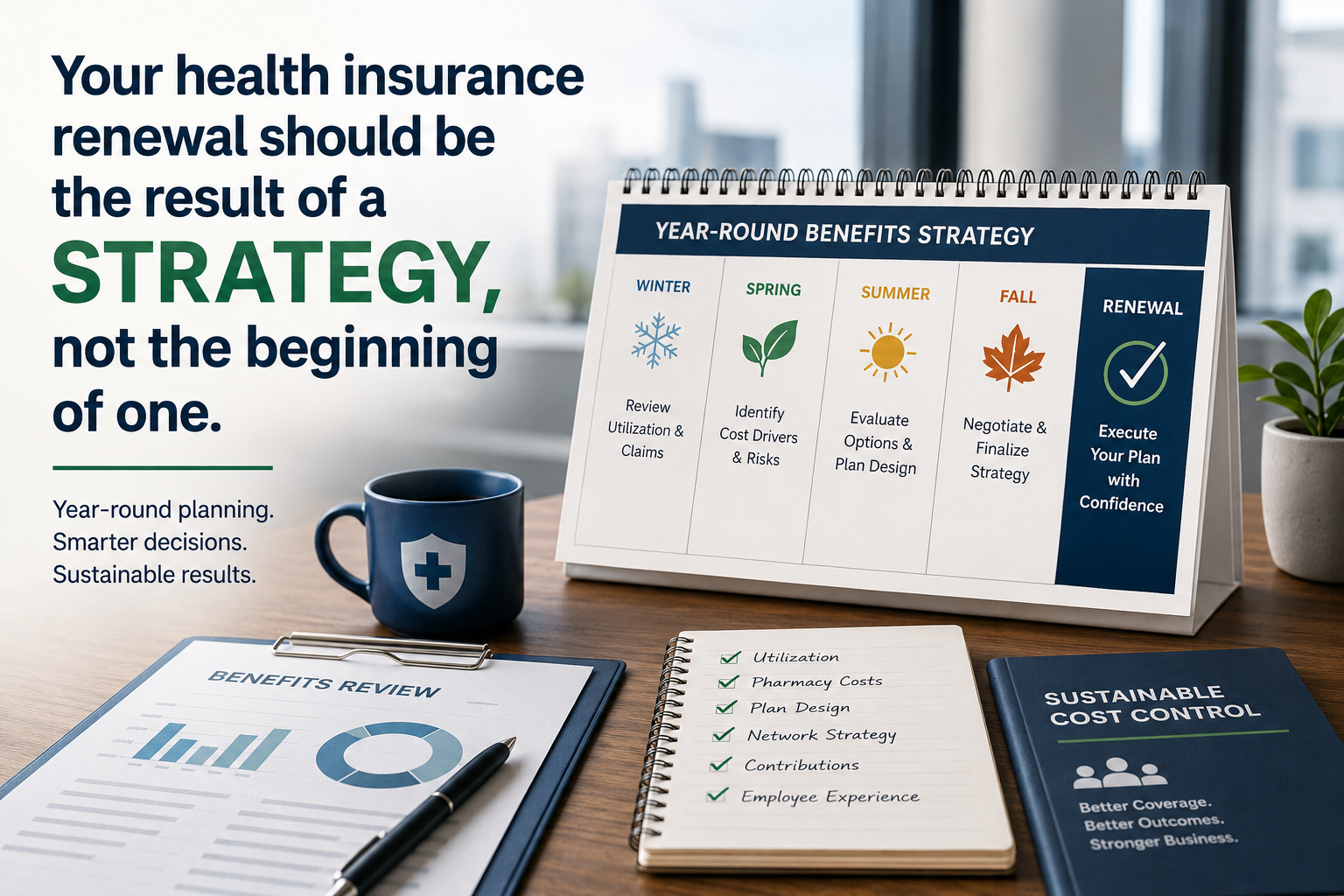
Your health insurance renewal should be the result of a strategy, not the beginning of one. As medical and pharmacy expenses continue to rise, employers that wait until renewal season to address costs find themselves with limited options and fewer levers to pull. In my experience, sustainable cost control comes from treating health benefits as a year-round business priority rather than an annual transaction.
Key Takeaways
Controlling costs means more than finding a cheaper carrier or raising deductibles; renewals are influenced by utilization, claims experience, pharmacy costs, demographics, plan design, network strategy, and contribution structure.
The most common mistake is waiting until renewal to think about cost—by then, many decisions affecting the renewal have already occurred.
Focusing only on premium while ignoring employee out-of-pocket costs can backfire when employees face unmanageable deductibles, copays, or narrow networks.
Year-round benefits management includes reviewing utilization, understanding cost drivers, evaluating contributions and participation, and beginning renewal planning well before the anniversary date.
Sustainable cost control balances total cost with a benefit employees can actually use.
What's the biggest misconception about controlling health insurance costs?
The biggest misconception is that controlling health insurance costs simply means finding a cheaper carrier or choosing a plan with a higher deductible. In reality, an employer's renewal is influenced by several factors, including utilization, claims experience, pharmacy costs, demographics, plan design, network strategy, and the way the employer structures its contribution. A lower premium does not necessarily mean a better long-term outcome.
Many employers treat the renewal as a narrow price-shopping exercise. They see the increase, ask for competing quotes, and select whichever option shows the smallest percentage jump. That approach misses the underlying drivers and leaves money—and opportunity—on the table.
How does active management change the renewal outcome?
We recently worked with an employer facing a significant renewal increase. Rather than immediately moving the group to another carrier, we reviewed the renewal, claims and risk information, available plan alternatives, network options, and the employer's contribution strategy. That gave us several different levers to work with instead of treating the carrier's initial renewal as the final answer.
The situation demonstrated why employers need to actively manage their benefits program rather than simply renew it once a year. When you understand what is driving the increase, you can make informed decisions about where to intervene. Sometimes the answer is plan design. Sometimes it is network configuration or pharmacy strategy. Sometimes it is adjusting the employer-employee cost share. Often it is a combination.
What mistakes do employers make when trying to control costs?
Waiting until renewal to start thinking about cost. By that point, many of the decisions affecting the renewal have already occurred. Claims have been incurred, participation patterns are set, and the timeline for meaningful change is compressed.
Another common mistake is focusing almost entirely on premium while ignoring what employees actually pay when they use the plan. Saving money on premium can quickly become a bad decision if employees are pushed into deductibles, copays, prescription costs, or networks that do not work for them. When employees cannot afford to use their coverage or cannot access their providers, the plan fails regardless of how well it performed on a spreadsheet.
What should employers do instead?
Treat health benefits as a year-round business strategy. Review utilization and emerging risks throughout the plan year. Understand what is driving increases—whether it is high-cost claimants, pharmacy trends, overall utilization patterns, or demographic shifts. Evaluate contribution levels and plan participation to ensure the program remains competitive and financially sustainable.
Begin renewal planning well before the anniversary date. That means starting conversations with carriers, brokers, and advisors months in advance, not weeks. Early preparation creates room to model alternatives, negotiate terms, and evaluate options without the pressure of a looming deadline.
How should you evaluate renewal options?
When the renewal arrives, compare more than carrier premiums. Look at plan design, provider networks, pharmacy benefits, employer contributions, employee out-of-pocket exposure, and viable alternative funding or product strategies. Each of these elements affects total cost and employee experience.
In my experience, the objective should be sustainable total cost and a benefit employees can actually use—not simply the lowest renewal percentage. A plan that reduces premium by shifting costs to employees may create affordability problems that undermine morale, productivity, and retention. A plan that locks employees into a narrow network may generate complaints and dissatisfaction even if the price is attractive.
What levers can employers pull?
Depending on the group's situation, employers can adjust plan design to steer utilization toward higher-value care, explore different network configurations, reconsider pharmacy benefit strategies, modify employer-employee contribution splits, or evaluate alternative funding arrangements. The key is having data and time to assess which levers make sense for your workforce and your budget.
Why does year-round management matter?
Employers that actively manage their benefits throughout the year have far more options when costs start moving in the wrong direction. They can identify trends early, intervene before problems compound, and enter renewal discussions with a clear understanding of what they are buying and why.
Health insurance is one of the largest line items in most benefits budgets. Treating it as an annual event rather than an ongoing responsibility limits your ability to control costs and maximize value. The renewal should confirm a strategy you have been executing all year, not force you to invent one under pressure.
What does sustainable cost control look like?
Sustainable cost control balances affordability for the employer with value for the employee. It considers both premium and out-of-pocket costs. It evaluates networks, pharmacy benefits, and plan features in the context of your workforce's needs and preferences. It builds in flexibility to respond to emerging risks and market changes.
In my experience, employers that take this approach see better outcomes over time. They avoid the whipsaw effect of chasing the lowest premium one year only to face a painful correction the next. They maintain employee trust by ensuring coverage remains accessible and useful. They make informed decisions based on data, not panic.
Frequently Asked Questions
When should employers start planning for their health insurance renewal?
Employers should begin renewal planning well before the anniversary date—ideally several months in advance. Starting early creates time to review claims data, model alternatives, evaluate network and plan design options, and negotiate with carriers without the pressure of a compressed timeline. Waiting until the renewal notice arrives limits your options and forces reactive decision-making.
Why is focusing only on premium a mistake when controlling health insurance costs?
Focusing only on premium ignores what employees actually pay when they use the plan. A lower premium can become a poor decision if employees face unaffordable deductibles, copays, prescription costs, or provider networks that do not work for them. Sustainable cost control considers total cost—both what the employer pays and what employees experience when they seek care—and ensures the benefit remains accessible and useful.