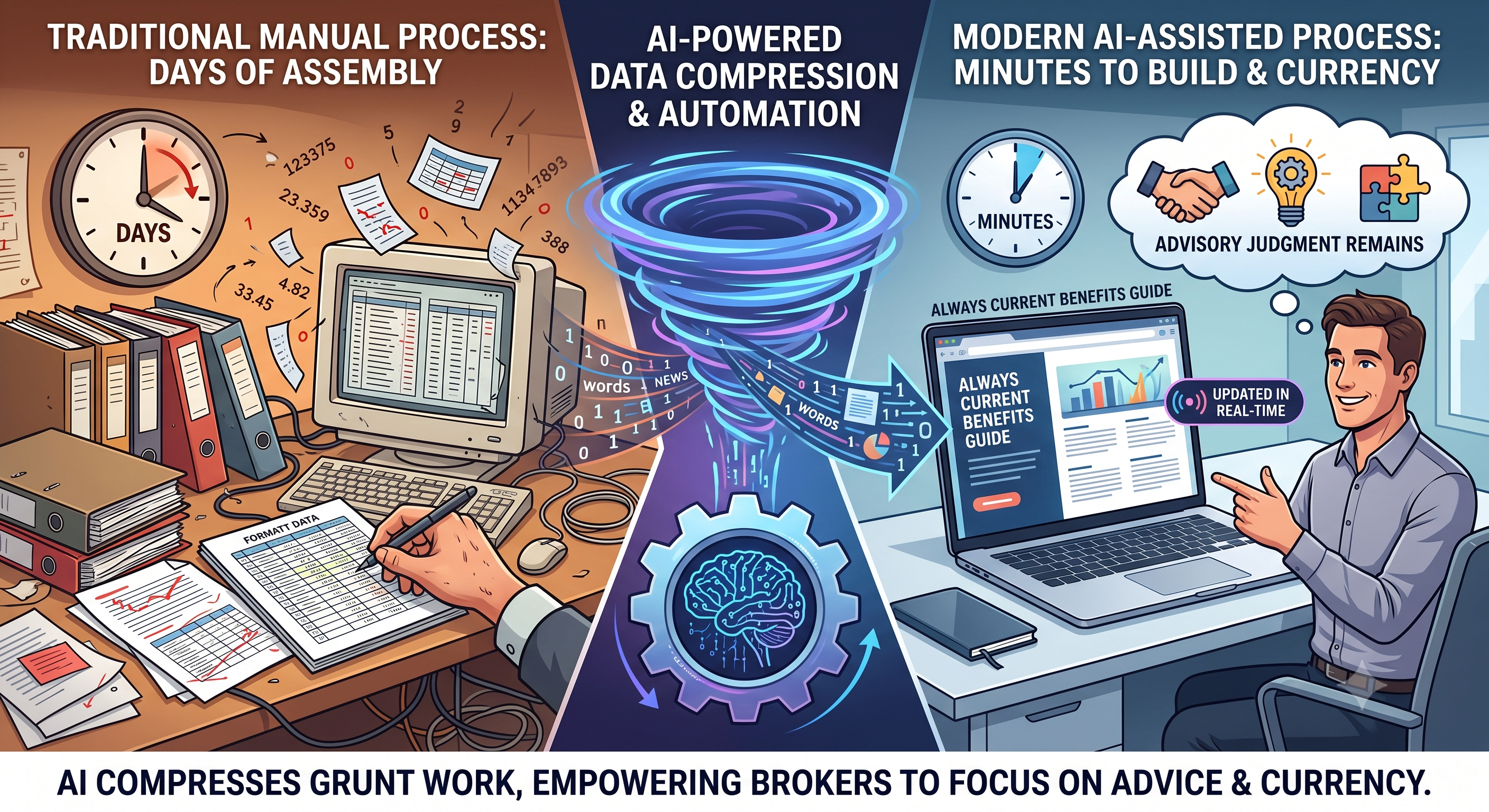
For most of my 25 years in benefits, building an employee benefit guide meant the same slow process: pull plan details from each carrier, rebuild the same document structure every year, hand-format comparisons, and proofread for the errors that creep in when you're copying numbers across spreadsheets. It worked, but it took days, and the result was only as current as the last manual update.
AI changes the economics of that work. Here's what actually shifts — and what doesn't.
What used to take days
The manual process is mostly assembly, not thinking. Gathering plan data, laying out the same sections you build every year, formatting cost comparisons, and checking it all for transcription errors. None of that requires expertise — it requires hours. That's exactly the kind of work AI is good at compressing.
What AI speeds up
Pulling structured information out of carrier documents, generating a clean first draft in a consistent format, building plan comparisons, and producing the plain-language explanations that make a guide readable. The repetitive assembly that ate most of the time becomes minutes instead of days.
What AI does not replace
The judgment. Which plan actually fits this employer's workforce, how to position an HSA for a specific group, what a particular client's employees tend to misunderstand — that's advisory expertise, and AI doesn't have it. The value of a benefits advisor was never the formatting. It was knowing what to recommend and why.
The real benefit isn't speed — it's currency
A manual guide is accurate the day it's finished and slowly drifts out of date. When the assembly is fast, you can keep guides current — update them at renewal, fix a changed carrier detail, refresh the numbers — without rebuilding from scratch. A guide that stays accurate is worth far more than one that was perfect once.
What this means for brokers
The advisors who benefit most aren't the ones replacing themselves with AI — they're the ones who stop spending