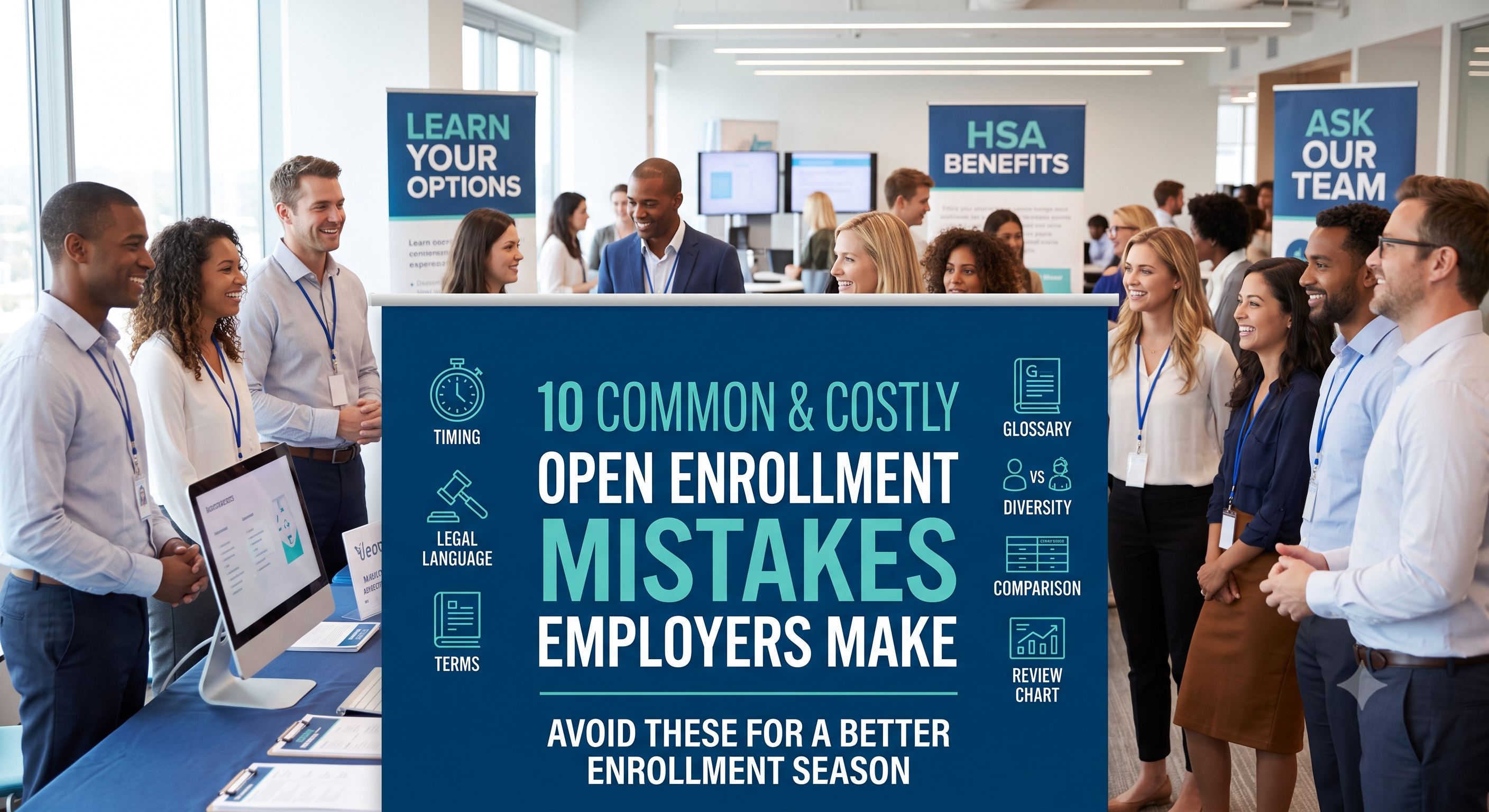
Open enrollment is the one time each year when every employee makes decisions that affect their coverage and their paycheck for the next twelve months. After 25 years of running these for employers, the same avoidable mistakes show up again and again — and most of them cost the employer in confusion, low participation, or benefits dollars left on the table.
Here are the ten that come up most.
1. Starting too late
Enrollment communication that begins the week before the deadline guarantees rushed decisions and a flood of last-minute HR questions. Give employees real time to read, ask, and decide.
2. Leading with the legal language
Required notices matter, but they shouldn't be the first thing an employee sees. Lead with what they actually care about — their plan choices and what each costs them per paycheck.
3. Assuming employees understand insurance terms
Deductible, coinsurance, out-of-pocket maximum — these are not common knowledge. A guide that doesn't define them loses most of its readers in the first paragraph.
4. Treating every employee the same
A 25-year-old single employee and a 45-year-old with a family have completely different needs. Communication that speaks to "everyone" speaks to no one.
5. Ignoring the spouse
In many households the spouse makes the benefits decision. If your materials only reach the employee, you're missing the actual decision-maker.
6. No clear comparison of plan options
Employees need to see plans side by side — costs, deductibles, networks — not buried in separate documents. If they can't compare in under a minute, they'll default to whatever they had last year, right or wrong.
7. Forgetting about the HSA opportunity
High-deductible plans paired with an HSA are often the best long-term value, but only if employees understand the tax advantages. Most don't, because no one explains it clearly.
8. Relying on a single communication channel
One email does not reach everyone. A mix — email, a printed guide, a short meeting, a reminder — dramatically improves participation.
9. Making it hard to get help
If an employee with a question can't easily find who to ask, they guess. Clear contact information and a real support path prevent bad enrollment decisions.
10. Never measuring what happened
If you don't review participation, questions received, and what confused people, you'll make the same mistakes next year. Open enrollment should get better annually, not just repeat.
The bottom line
Most open enrollment problems aren't about the plans — they're about communication. Employees who understand their options make better decisions, ask fewer questions, and value their benefits more. Clear beats comprehensive, every time.